Prevent Blindness offers expert-approved educational resources covering dry eye causes, symptoms, tips and more
Prevent Blindness has declared July as Dry Eye Month to raise awareness and educate the public and healthcare allies on dry eye. The condition occurs when tears do not provide adequate lubrication for the eyes. In some cases, dry eye can decrease vision, and if left untreated, may cause damage to the front of the eye.
Prevent Blindness offers free dry eye resources including a dedicated webpage, fact sheets and social media graphics available in English and Spanish, and expert and patient videos. Dry Eye Month is once again supported by OCuSOFT Inc., a privately held eye and skin care company dedicated to innovation in eyelid hygiene and ocular health.
New this year, Prevent Blindness will include a dry eye discussion in the July episode of the Prevent Blindness Focus on Eye Health Podcast, featuring Prevent Blindness ASPECT Patient Engagement Program participants Aidan Moore, co-founder and executive director of the Dry Eye Foundation, and Pam Gaio, an individual living with dry eye.
The Prevent Blindness Focus on Eye Health Expert Series includes:
- “Dry Eye Disease and Meibomian Gland Dysfunction (MGD): What You Need to Know” with April Jasper, OD, FAAO, of Advanced Eyecare Specialists.
- “Dry Eye” with Prevent Blindness Board of Directors Member Stephanie Jones Marioneaux, MD, President-Elect of the American Academy of Ophthalmology (AAO).
According to the American Academy of Ophthalmology (AAO), health conditions that can cause dry eye include diabetes, thyroid dysfunction, rheumatoid arthritis, Sjogren syndrome, Parkinson’s disease, and rosacea. Those who have had previous eye surgery are also at higher risk.
Additionally, the AAO states that taking certain medicines can cause dry eye, such as diuretics (water pills), beta-blockers, allergy and cold medicines (antihistamines), sleeping pills, anxiety medications and antidepressants, and heartburn medications. Patients should always alert their eye doctor to any medications they are taking, including prescription and non-prescription medicines.
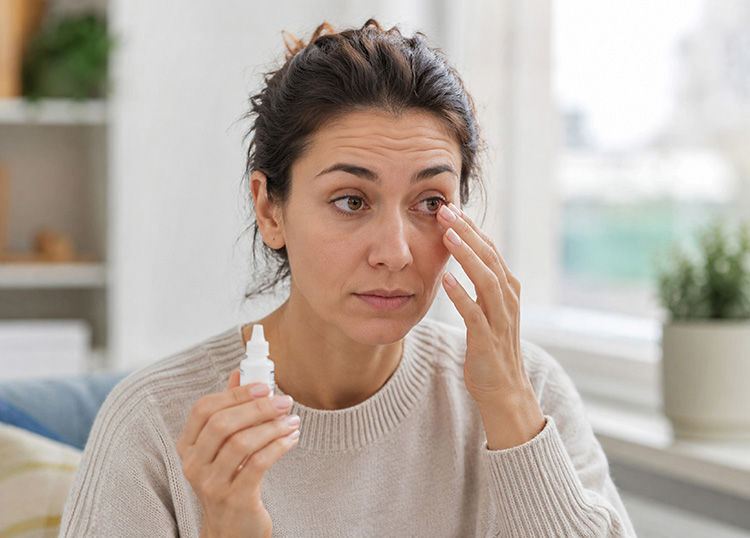
The use of eye drops is a common dry eye treatment recommended by eye doctors. Prevent Blindness offers materials on the proper way to take eye drops, including a printable one-sheet, an informative video, “How to Use Eye Drops,” featuring Dr. Yara Catoira-Boyle, Visionary Eye Specialists, and a dedicated webpage.
“Dry eye is commonly misunderstood. If left untreated, it can cause significant damage to vision,” said Jeff Todd, president and CEO of Prevent Blindness. “Speak with your eye doctor to go over all of your symptoms, medical history and medications to ensure that sight can be preserved today and for the future.”